What kind of monster locks a paralyzed child in the trunk of a car in the middle of a sweltering summer day? That’s not just a dramatic headline. That’s exactly what happened to my daughter, Lucy. She’s 16, sweet, kind, paralyzed from the waist down.
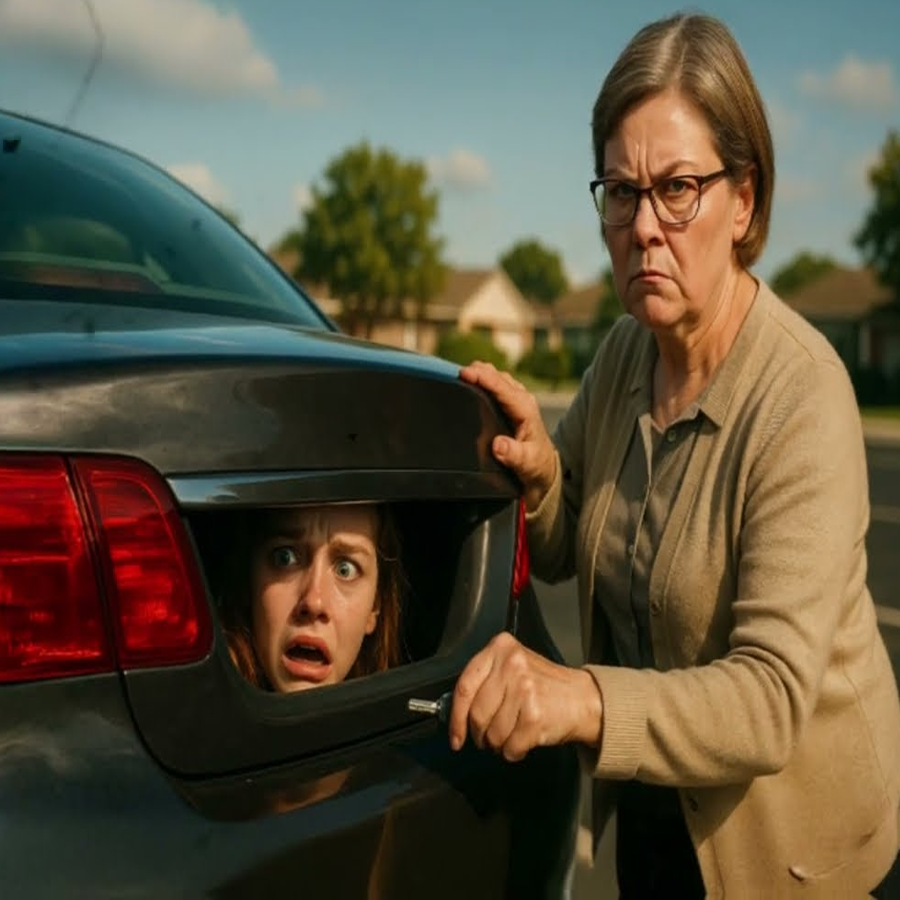
What kind of monster locks a paralyzed child in the trunk of a car in the middle of a sweltering summer day? That’s not just a dramatic headline. That’s exactly what happened to my daughter, Lucy. She’s 16, sweet, kind, paralyzed from the waist down.
And yet, that didn’t stop the president of our HOA, Lydia Reed, from treating her like a piece of trash to be thrown out and forgotten. I can still hear Lucy’s voice on the phone, panicked, whispering from the inside of that trunk. She didn’t even know where she was. The GPS on her wheelchair had gone dead. It was 98° out and she was locked inside a dark metal coffin. No air, no water, no mercy.
And the craziest part, Lydia’s own dash cam recorded the whole thing. Yeah, that’s right. The very evidence that sent her life crashing down didn’t come from me. it came from her. Sometimes karma doesn’t wait around. Sometimes it hits back with the full force of justice and a memory card.
This isn’t just a story about HOA power trips. It’s about a father.
It’s about a daughter and it’s about the moment everything changed. Stay with me. What you’re about to hear might make you cry or rage, but I promise justice came and it came hard. Let me take you back to how it all began. My name is Bobby Crawford. I’m 63 years old, a widowerower, a veteran, and most importantly, I’m Lucy’s dad.
I didn’t plan to raise a child alone in my 60s, but life rarely asks for permission. My wife Marlene passed away from cancer when Lucy was only nine. She was the glue that held us together. And when she was gone, I thought the whole world might fall apart. But Lucy, she held me together. That little girl with the bright green eyes and the stubborn smile gave me a reason to keep waking up in the morning.
Then came the accident. It was a rainy Thursday afternoon 3 years ago. A delivery truck ran a red light, slammed right into the passenger side of our car. I had a fractured collar bone. Lucy, she never walked again. Spinal cord injury, complete T8. I didn’t know what those words meant at first. I had to learn fast.
Ramps, lifts, catheter tubes, physical therapy, pressure sore management. It was like boot camp all over again. Only the stakes were my daughter’s dignity and independence. We moved into a quiet, gated community in a suburb outside Charleston, South Carolina, thinking it would be peaceful, secure, safe, and for a time it was.
I installed a mobility lift in the garage, widened the hallways, and retrofitted Lucy’s bedroom with voice activated lighting and climate control. She loved technology, still does. She even helped design her own wheelchair interface using voice recognition and joystick controls. Her independence was hard one and deeply cherished, but that was before she arrived. Lydia Reed.
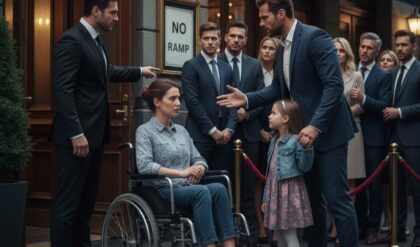
Lydia became president of the HOA just eight months ago. Blonde hair always perfect, heels clicking like a judge’s gavvel on concrete and a voice that could curdle cream. From the moment she moved in, it was clear she didn’t like unpleasant sights, which was her way of saying disabled people, untrimmed hedges, and anything that wasn’t country club aesthetic. The first time we clashed was over Lucy’s wheelchair ramp.
You need to submit proper HOA modification forms, she snapped. That thing’s an eyesore. That thing, I said, is my daughter’s legs. She rolled her eyes and walked away. I should have known then this wasn’t going to be a simple case of neighborly disagreement. But Lucy, she never complained. Not once.
She still waved to Lydia, still smiled when Lydia passed by walking her poodle. Still tried to be kind even when kindness wasn’t returned. She’s probably just sad inside. Lucy once said, “People who hurt others are usually hurting. two. God, my kid, she’s better than me. Stronger than most adults I know. Even with pain meds, daily muscle spasms, and nights where she cries from phantom leg pain, she still insists on going to school. Still wants to volunteer at the library.
Still tries to make everyone around her feel seen. Every time I look at her, I see the best of Marlene. Every time I see Lydia, I remember what evil looks like in polite clothing. A few months back, Lydia started sending me violation notices. One for visible medical equipment in the garage, another for unauthorized visitor activity because Lucy’s physical therapist parked in our driveway.
The last straw was the complaint about disruptive behavior, which turned out to be Lucy laughing too loudly on our porch while video chatting with her best friend. She’s disturbing the harmony of the neighborhood,” Lydia wrote in an email. I should have sued her then and there, but I didn’t. I wanted peace.
I still believed we could talk it out. After all, we live in America. We value freedom, don’t we? Freedom to be different, freedom to be heard, freedom to exist. Looking back now, I realize that giving Lydia the benefit of the doubt was my greatest mistake. Because she wasn’t just a control freak, she was dangerous.
And one summer afternoon, she proved it in the most despicable way imaginable. If you’ve never dealt with a tyrant in high heels and pearls, let me introduce you to Lydia Reed. She wasn’t born in our neighborhood. She moved in like a storm with a moving van and a superiority complex about 8 months ago.
Her house sat three doors down from mine, white columns, fresh landscaping, and two matching Mercedes parked out front like trophies. From the moment she arrived, she acted like she owned not just her property, but the whole street. And within a month, she did figuratively. At least, she ran for HOA president in a special election after the previous one moved away unexpectedly.
No one else wanted the job, and Lydia swept in like she was campaigning for Congress. She made big promises, cleaner streets, stricter rules, raising standards. At the time, folks were charmed. Looking back, I should have warned them what we were inviting in. She didn’t waste any time once she had power.
First came the policy updates, six pages long, printed in gold embossed letterhead. Everything from paint colors to lawn ornament restrictions to acceptable fence height. Then came the complaint letters, some valid, most not. She finded a 78-year-old man named Ernie for leaving his trash can curbside 2 hours too long.
Sent a formal warning to a family with twin toddlers for sidewalk chalk drawings. She even told Mrs. Garrett, who uses a walker, that she couldn’t keep her potted tomatoes out front anymore because they cluttered the aesthetic. But the way she treated Lucy, that was personal. It started small. A comment here, a glance there.
One day, Lucy was wheeling herself home, and Lydia muttered, “These sidewalks weren’t built for equipment.” Another time she asked Lucy not to roll so fast near her yard, claiming the wheels might scuff the sidewalk. But the worst was at the HOA meeting. I’ll never forget it. Lucy came with me. She wanted to speak up about accessibility.
Thought maybe if folks heard from her directly, they’d support adding curb ramps at key intersections. She even prepared a little speech. When she finished, the room was quiet. Then Lydia leaned forward, smiled that icy smile, and said, “Perhaps if certain families didn’t bring their limitations into the neighborhood, we wouldn’t need to make such drastic adjustments.” My hands curled into fists under the table.
No one said anything. No one stood up for us. That silence was deafening. After that meeting, Lydia escalated. She began documenting every movement Lucy made filing complaints about unapproved modifications to the house even though I had permits. She objected to the sound of Lucy’s motorized wheelchair, calling it a nuisance noise.
Once when a group of neighborhood kids came over to help Lucy decorate her porch for Halloween. Lydia accused me of hosting unauthorized events and threatened a $500 fine. When I confronted her, she smiled and said, “You chose to live in a community with standards. If you can’t meet them, maybe you should reconsider where you belong.
” I saw then that she didn’t just dislike us. She wanted us gone. And yet, she was so careful, so clean. She never raised her voice, never swore, never said anything outright hateful. Everything was couched in policy and concern. She used the rulebook like a weapon, a scalpel disguised as community service.
Most of our neighbors didn’t see what was happening. To them, Lydia was just organized, professional, maybe a little intense. She hosted wine tastings, ran holiday decorating contest, and made sure the hedges were trimmed. But behind those manicured roses was a cruel woman who couldn’t stand anything that disrupted her perfect little image, including my daughter.
Especially my daughter. Still, I kept trying to keep the peace. I told Lucy to ignore her. I bit my tongue. I filed counter complaints, all of which Lydia lost or misfiled. I held on to the idea that people like her eventually reveal themselves. That karma catches up. And oh boy, did it.
But not before she did something that crossed a line no human being should ever cross. Let us know where you’re watching from today. And if you’re new here, don’t forget to like this video and subscribe to join our growing community because what happened next even now? It’s hard for me to say out loud, but I will. You need to know the kind of evil that hides behind a smile like Lydia Reeds. It was a Sunday.
I remember because I had just come back from church and was putting ribs on the smoker when I realized Lucy wasn’t in the house. That wasn’t like her. Ever since the accident, we had a system. She’d let me know if she was going for a ride in her wheelchair.
Always sent me a quick text, even if it was just a lap around the block. But that day, nothing. Her wheelchair had GPS installed, not just for tracking, but in case she ever needed help. I pulled up the app and frowned. The location was blank, no signal. My stomach sank.
The only time it ever went dead was when her battery was completely drained or when someone had shut it off manually. I called her cell straight to voicemail. I dropped everything and ran. The last place I remembered seeing her was the community park three blocks over. She loved it. There loved the breeze, the trees, the open path near the pond.
I ran down the street like a man possessed, asking neighbors if they’d seen her. Nobody had except one. Helen Matthews, our neighbor from across the street, flagged me down. Bobby, she said, eyes wide with worry. I saw Lydia talking to Lucy near the mailboxes about 20 minutes ago. It looked tense. Then Lydia opened the trunk of her car and they both disappeared around back. What do you mean? The trunk.
She was yelling something about Lucy blocking the pathway. I didn’t even respond. I just ran. Lydia’s driveway was empty. No car. I looked around, frantic, when I spotted a piece of familiar pink plastic near her trash bins, Lucy’s water bottle, the same one she always attached to the side of her chair. My blood turned cold. I called 911.
They told me a patrol car would be sent, but I didn’t wait. I got in my truck and started driving the route out of the neighborhood. I knew Lydia had errands every Sunday Whole Foods, then the country club. I tried both. Nothing. That’s when my phone buzzed. A notification from my home security system. It was a flagged clip motion detected at the side of our garage 30 minutes earlier. I pulled it up.
There she was, Lucy smiling and chatting, rolling out down the driveway. And there, just behind her, Lydia following. The footage showed Lydia stopping Lucy halfway down the block. I couldn’t hear what was said, but I could see Lydia’s face twisted into that passive, aggressive smile she wore like a weapon.
Then she motioned toward her car. Lucy shook her head. Lydia stepped forward, grabbed the handles of her wheelchair, and pushed. I stopped breathing. The clip ended there. 10 more minutes passed before I got a call this time from a police officer named Detective Paul Jenkins. He was tur but professional. Mr. Crawford, are you the father of Lucy Crawford? Yes.
Where is she? She’s safe now. We found her in the trunk of a vehicle registered to a Lydia Reed. She was dehydrated and disoriented, but alert. EMS is transporting her to Mercy General. I swear I nearly dropped the phone. The trunk I whispered. Yes, sir. There’s more. Lydia’s dash cam footage caught the entire event.
It autouploads to her cloud account. She didn’t realize it until after we pulled her over. She was caught on video forcing Lucy into the trunk, locking it, and driving off. My knees buckled. Is she Did she say anything about what happened? She said Lydia told her she was tired of special treatment and that she was going to teach her what real inconvenience feels like. She left her in the trunk.
No ventilation, no water in 98°. I don’t remember driving to the hospital. I barely remember walking into that ER room, my hands shaking, my heart slamming in my chest. But I will never forget the sight of my daughter lying there in that hospital bed. Her lips cracked, her cheeks flushed red, trying to smile at me through the pain. “I’m okay, Dad,” she whispered.
“No, she wasn’t, and neither was I.” The doctor said if they had found her an hour later, it could have caused organ failure. Lucy had been in that trunk for almost 2 hours. When Detective Jenkins arrived, he showed me the dash cam footage. I couldn’t believe my eyes. Lydia’s voice was crystal clear. I’m so sick of the wheelchair sympathy, she said. Everyone bends over backwards for you like you’re a saint.
Let’s see how you manage when no one’s watching. She stuffed Lucy’s chair into her trunk first, then lifted my daughter like a sack of laundry and shoved her in. “You’ll be fine. Just need a little tough love.” She slammed the trunk. I’ve seen combat zones less heartless than that footage. Lydia was arrested on the spot, of course.
Charged with felony kidnapping, abuse of a vulnerable adult, false imprisonment, and reckless endangerment. The officer said she tried to argue it was just a lesson and not permanent. as if that made it acceptable. But here’s the part that still haunts me. She smiled in the footage. Not a full grin, but a smug, satisfied curl of her lips, like she thought she was doing something righteous.
I didn’t sleep for 3 days after that. Lucy was discharged two nights later. The nurses and staff had tears in their eyes. Word had spread fast. One of them, a big guy named Travis, hugged me hard and whispered, “You raise a brave girl, Mr. Crawford.” “No.” Lucy raised me. That night, as I sat beside her bed, holding her hand, I made a vow. I wouldn’t just let this slide.
I wouldn’t move away quietly like so many families did when bullies like Lydia made life unbearable. I would fight and I wouldn’t stop until justice rang so loud no other HOA queen would dare treat someone like Lucy as disposable again. I didn’t grow up looking for fights, but I never ran from one either.
And now with Lucy safe but shaken, I knew I had a responsibility to her, to every family who had ever had to face off with someone like Lydia Reed and felt powerless. I started by collecting every shred of evidence I could find. First, I downloaded the dash cam footage Lydia’s system had uploaded to the cloud. Detective Jenkins helped me get a copy for my own records. It was horrifying to watch, but I needed it. Proof.
Unshakable. Undeniable proof. Then I pulled together HOA emails, every passive aggressive warning she had ever sent, every fine, every manipulated policy, every so-called violation she pinned on Lucy. I even found an audio recording Lucy had saved from a meeting where Lydia told her that people like her make neighborhoods less desirable.
I built a case, not just a legal one, a moral one. And I wasn’t alone. Turns out Helen Matthews wasn’t the only neighbor Lydia had rubbed the wrong way. Ernie, the old man fined for his trash bin, reached out and gave me copies of his own letters. Mrs. Garrett, who’d been bullied about her tomato plants, called me to say she was ready to talk.
A woman named Rebecca, whose autistic son had been excluded from HOA sponsored events because he might cause disruptions, sent me a folder full of complaints she had never dared submit. People were angry. They just needed someone to say, “It’s okay to stand up.” And now they had me. I called an emergency HOA meeting.
As a resident, I had the right to request it if I could get at least five signatures. I got 23 in a single afternoon. The meeting was set for that Friday in the community clubhouse. The moment I walked in, I saw Lydia. She had posted bail the night before.
I don’t know who paid for it or how she walked out so fast, but she looked smug, like nothing had touched her, like everything was under control. She wore a cream blazer, heels, and that signature fake smile. Bobby, she said like we were old friends. I hope you’re not here to stir up more drama. The situation is being handled. Handled? I said, my voice calm but firm. You kidnapped my daughter. She gave a short laugh.
Oh, Bobby, you’re blowing it way out of proportion. The poor girl just needed some perspective. I was making a point. The room went silent and then I plugged in my USB. The projector blinked to life. I played the dash cam footage. No introduction, no buildup, just raw, unedited evidence. Lydia’s voice, her hands on Lucy’s wheelchair, the trunk closing. There were gasps. One woman sobbed.
Ernie stood up and shouted, “You monster.” When it ended, I stepped forward. For months, this woman has used her position to bully families, discriminate against the disabled, and abuse her authority. She targeted my daughter, a child who did nothing but try to live her life with dignity and treated her like garbage. And now you’ve seen it for yourselves. Lydia tried to speak, but the room exploded.
People shouted over her. Someone shouted, “Resign!” Another yelled, “We should press charges.” I raised a hand. I don’t want vengeance. I want justice and I want change. I presented a petition calling for Lydia’s immediate removal from the HOA board signed by over 70% of the homeowners under HOA bylaws.
That was enough to call a vote for removal. The motion passed unanimously. She was done. Two sheriff deputies arrived just minutes later to escort her out. She still wore that smug look until one of them whispered something in her ear. Her face changed then. Pale, tight lipped. Later, I learned the DA had filed additional charges based on the community complaints.
It wasn’t just kidnapping anymore. It was a pattern of abuse. And then came the twist none of us saw coming. One of the officers brought me a printed document. It was a background check on Lydia Reed. She had changed her name three years ago. Her birth name was Diane Mallerie, previously investigated in Florida for elder abuse in a retirement community where she served as a management consultant.
The case had been dismissed due to lack of evidence. But the file was thick. She had done this before. That realization made everything sharper. Lydia hadn’t just snapped. This was her pattern. a woman who sought power in quiet neighborhoods where she could control the narrative, manipulate policy, and hide behind bureaucracy.
But not anymore. Lucy, meanwhile, was doing better. We spent the week after Lydia’s arrest watching cartoons, eating ice cream, and decorating her room with glow-in-the-dark stars. Her strength amazes me. Every day she reminded me why I fight not just as a father, but as a man who believes that no one, especially not a child, should ever be treated as a burden. I also got a call from Dr. Rachel Monroe, Lucy’s rehab physician.
She told me Lucy’s blood pressure had stabilized, her spirits were improving, and her determination to walk again with assistance had come back stronger than ever. She wants to train for the mobility exo suit trials next year, Dr. Monroe said, laughing.
She told me she plans to run past Lydia Reed one day and wave. That’s my girl. As for me, I’ve been invited to speak at a town hall meeting hosted by the state’s attorney general. The topic, HOA abuse, discrimination, and the rights of families with disabled members. I’m going. Not because I want attention, but because there are so many more Lydia out there, and they don’t always get caught by their own dash cam.
The wheels of justice don’t always turn fast, but when they do, and when they grind down someone who truly deserves it, there’s a sound to it. It’s the sound of a gavvel cracking like thunder across a courtroom. It’s the sound of community voices finally being heard. And in this case, it was the sound of my daughter laughing freely, joyfully because her abuser no longer held any power over her. Lydia Reed’s trial began 6 weeks after the emergency HOA meeting.
The media had picked up the story. HOA president arrested for kidnapping disabled teen. One headline read, “Another dash cam from hell. The video that turned a neighborhood upside down.” By the time jury selection started, the courtroom was packed. Lydia showed up looking polished. Of course, perfect makeup, pressed beige suit, acting as though this was all some unfortunate misunderstanding.
She had a new lawyer, the kind who probably charged by the minute and drank mineral water between objections. But all that polish couldn’t scrub the footage we had. It couldn’t silence Lucy’s testimony or mine or Helen’s or the stack of complaints from other families detailing months, even years of intimidation, harassment, and manipulation.
The prosecution didn’t hold back. They showed the dash cam footage to the jury first. No buildup, just the raw truth. Lydia trying to play savior and enforcer in one twisted act. Her voice, her hands, that trunk. Then they brought Lucy to the stand. I sat there holding my breath, watching my daughter roll forward in her chair.
She wore a pale blue sweater and had her hair pinned back. She looked older, braver. She told them everything. How Lydia had cornered her. How she said Lucy owed the neighborhood some silence. How the trunk had no air. How she had prayed someone would hear her knocking from inside. How she thought she might die. Not a dry eye in the room.
Even the judge paused for a moment before speaking. When it was my turn, I told the court what Lydia had taken from us. Not just physical safety, but peace, dignity, the kind of everyday freedom most people take for granted. The defense tried to claim Lydia had a mental break, that her actions were impulsive, even that she meant to return quickly, but got distracted.
They tried to say she didn’t intend harm, but harm doesn’t need a clock. When the jury came back with a verdict, the courtroom was silent. You could hear the air hum. Guilty on all counts. Kidnapping, false imprisonment, abuse of a vulnerable adult, harassment, negligent endangerment. The judge sentenced her to 12 years in prison with no possibility of parole before serving five.
She was also ordered to pay restitution for Lucy’s medical bills and damages for emotional trauma. But the punishment didn’t stop there. The HOA board, newly formed after Lydia’s removal, launched a full internal audit of her term. Turns out she’d used HOA funds to cover personal expenses, spa visits, gift baskets to city officials, even a home beautifification consultant who was really just her niece.
Civil suits followed. Three other families filed complaints against her. One elderly couple had been threatened with foreclosure for refusing to upgrade their porch railing. Another single mom was fined thousands for an unapproved backyard trampoline her autistic son used for therapy. Lydia, once the queen of the culde-sac, was now facing a mountain of legal trouble. And nobody came to her defense.
Not one neighbor, not one board member, not one soul. Because when masks fall, people remember who smiled and who sneered. As for Lucy, her healing began the day Lydia went behind bars. Doctor Rachel Monroe said something powerful during one of Lucy’s checkups. Justice isn’t just about what happens to the villain.
It’s about what opens up for the survivor. And she was right. Lucy’s smile came back brighter than ever. She went back to school that fall full-time. She gave a speech at an accessibility conference in Colia, South Carolina. Talked about resilience, community, and how people in wheelchairs aren’t weak, they’re just moving through the world differently.
She even started mentoring other disabled kids through a local support group. One day, she rolled into the kitchen while I was cooking breakfast, grinning eartoear. “Dad,” she said. “Remember the exo suit trials?” I nodded. How could I forget? She’d dreamed of it for years. Well, I made the list. I dropped the spatula. She laughed. You okay? I’m just proud of you, kiddo. That’s all.
We hugged right there in the kitchen. Bacon sizzling, sun pouring through the window, our dog barking at a squirrel outside. Ordinary life, the kind we almost lost. Later that week, our neighborhood hosted a block party. For the first time in over a year, people smiled for real.
There were tables with food, music playing, kids running around without worry. Lucy and I were the guests of honor. Helen gave a toast to Bobby and Lucy Crawford for showing us what strength looks like and for reminding us that justice isn’t about revenge. It’s about reclaiming what should never have been taken. People cheered. Lucy blushed.
As I looked around at that crowd, older couples, young parents, veterans like me, all gathered in peace, I realized something. We weren’t just celebrating the end of Lydia Reed. We were celebrating the return of our community. That night, as the stars came out, Lucy turned to me and asked softly, “Dad, do you think people really change?” I thought about it for a moment.
“People like Lydia?” I said, “Maybe not, but people like us.” “Yeah, we change. We grow. We rise.” She nodded. Then we already won. Yes, we did. Sometimes life throws storms at you. Not just the kind that shake your house, but the kind that shake your soul. I’ve been through war zones. I’ve held dying brothers in my arms. I’ve walked through fire, both real and metaphorical.
But nothing, nothing tests a man more than watching his child suffer and being unable to stop it. For a moment, I thought I had failed Lucy. But she taught me something I’ll carry to my grave. Justice doesn’t always come with sirens and headlines.
Sometimes it comes in a quiet hospital room where your daughter holds your hand and says, “It’s okay, Dad. I’m still here.” Sometimes it comes in the courage to speak up, to call out evil, even when it’s dressed in pearls and carrying a clipboard. Sometimes justice looks like neighbors who finally wake up and say, “Enough.” And sometimes it looks like a 16-year-old girl in a wheelchair teaching grown adults what strength really means. Lucy and I are still here. We still make pancakes every Saturday.
We still bicker over which dog to adopt next. And every evening we sit on the porch together. No more threats, no more fines, just the soft hum of a neighborhood healing. If there’s one thing I want you to take from our story, it’s this. Never be afraid to stand up. Not just for yourself, but for those who can’t.
Because sometimes you are the voice someone is waiting for. So tell me, have you ever met someone like Lydia Reed? Someone who used power to silence the vulnerable. What did you do? Drop your story in the comments. I want to hear it. Others need to hear it, too. And if you believe in justice, if you believe in second chances, real strength, and seeing HOA Kairens get exactly what they deserve, don’t forget to like this video and subscribe to our channel, HOA Revenge.
We post gripping real life HOA dramas every day that you won’t want to miss. Your support keeps us going. Thanks for watching. We’ll catch you in the next
And yet, that didn’t stop the president of our HOA, Lydia Reed, from treating her like a piece of trash to be thrown out and forgotten. I can still hear Lucy’s voice on the phone, panicked, whispering from the inside of that trunk. She didn’t even know where she was. The GPS on her wheelchair had gone dead. It was 98° out and she was locked inside a dark metal coffin. No air, no water, no mercy.
And the craziest part, Lydia’s own dash cam recorded the whole thing. Yeah, that’s right. The very evidence that sent her life crashing down didn’t come from me. it came from her. Sometimes karma doesn’t wait around. Sometimes it hits back with the full force of justice and a memory card.
This isn’t just a story about HOA power trips. It’s about a father.
It’s about a daughter and it’s about the moment everything changed. Stay with me. What you’re about to hear might make you cry or rage, but I promise justice came and it came hard. Let me take you back to how it all began. My name is Bobby Crawford. I’m 63 years old, a widowerower, a veteran, and most importantly, I’m Lucy’s dad.
I didn’t plan to raise a child alone in my 60s, but life rarely asks for permission. My wife Marlene passed away from cancer when Lucy was only nine. She was the glue that held us together. And when she was gone, I thought the whole world might fall apart. But Lucy, she held me together. That little girl with the bright green eyes and the stubborn smile gave me a reason to keep waking up in the morning.
Then came the accident. It was a rainy Thursday afternoon 3 years ago. A delivery truck ran a red light, slammed right into the passenger side of our car. I had a fractured collar bone. Lucy, she never walked again. Spinal cord injury, complete T8. I didn’t know what those words meant at first. I had to learn fast.
Ramps, lifts, catheter tubes, physical therapy, pressure sore management. It was like boot camp all over again. Only the stakes were my daughter’s dignity and independence. We moved into a quiet, gated community in a suburb outside Charleston, South Carolina, thinking it would be peaceful, secure, safe, and for a time it was.
I installed a mobility lift in the garage, widened the hallways, and retrofitted Lucy’s bedroom with voice activated lighting and climate control. She loved technology, still does. She even helped design her own wheelchair interface using voice recognition and joystick controls. Her independence was hard one and deeply cherished, but that was before she arrived. Lydia Reed.
Lydia became president of the HOA just eight months ago. Blonde hair always perfect, heels clicking like a judge’s gavvel on concrete and a voice that could curdle cream. From the moment she moved in, it was clear she didn’t like unpleasant sights, which was her way of saying disabled people, untrimmed hedges, and anything that wasn’t country club aesthetic. The first time we clashed was over Lucy’s wheelchair ramp.
You need to submit proper HOA modification forms, she snapped. That thing’s an eyesore. That thing, I said, is my daughter’s legs. She rolled her eyes and walked away. I should have known then this wasn’t going to be a simple case of neighborly disagreement. But Lucy, she never complained. Not once.
She still waved to Lydia, still smiled when Lydia passed by walking her poodle. Still tried to be kind even when kindness wasn’t returned. She’s probably just sad inside. Lucy once said, “People who hurt others are usually hurting. two. God, my kid, she’s better than me. Stronger than most adults I know. Even with pain meds, daily muscle spasms, and nights where she cries from phantom leg pain, she still insists on going to school. Still wants to volunteer at the library.
Still tries to make everyone around her feel seen. Every time I look at her, I see the best of Marlene. Every time I see Lydia, I remember what evil looks like in polite clothing. A few months back, Lydia started sending me violation notices. One for visible medical equipment in the garage, another for unauthorized visitor activity because Lucy’s physical therapist parked in our driveway.
The last straw was the complaint about disruptive behavior, which turned out to be Lucy laughing too loudly on our porch while video chatting with her best friend. She’s disturbing the harmony of the neighborhood,” Lydia wrote in an email. I should have sued her then and there, but I didn’t. I wanted peace.
I still believed we could talk it out. After all, we live in America. We value freedom, don’t we? Freedom to be different, freedom to be heard, freedom to exist. Looking back now, I realize that giving Lydia the benefit of the doubt was my greatest mistake. Because she wasn’t just a control freak, she was dangerous.
And one summer afternoon, she proved it in the most despicable way imaginable. If you’ve never dealt with a tyrant in high heels and pearls, let me introduce you to Lydia Reed. She wasn’t born in our neighborhood. She moved in like a storm with a moving van and a superiority complex about 8 months ago.
Her house sat three doors down from mine, white columns, fresh landscaping, and two matching Mercedes parked out front like trophies. From the moment she arrived, she acted like she owned not just her property, but the whole street. And within a month, she did figuratively. At least, she ran for HOA president in a special election after the previous one moved away unexpectedly.
No one else wanted the job, and Lydia swept in like she was campaigning for Congress. She made big promises, cleaner streets, stricter rules, raising standards. At the time, folks were charmed. Looking back, I should have warned them what we were inviting in. She didn’t waste any time once she had power.
First came the policy updates, six pages long, printed in gold embossed letterhead. Everything from paint colors to lawn ornament restrictions to acceptable fence height. Then came the complaint letters, some valid, most not. She finded a 78-year-old man named Ernie for leaving his trash can curbside 2 hours too long.
Sent a formal warning to a family with twin toddlers for sidewalk chalk drawings. She even told Mrs. Garrett, who uses a walker, that she couldn’t keep her potted tomatoes out front anymore because they cluttered the aesthetic. But the way she treated Lucy, that was personal. It started small. A comment here, a glance there.
One day, Lucy was wheeling herself home, and Lydia muttered, “These sidewalks weren’t built for equipment.” Another time she asked Lucy not to roll so fast near her yard, claiming the wheels might scuff the sidewalk. But the worst was at the HOA meeting. I’ll never forget it. Lucy came with me. She wanted to speak up about accessibility.
Thought maybe if folks heard from her directly, they’d support adding curb ramps at key intersections. She even prepared a little speech. When she finished, the room was quiet. Then Lydia leaned forward, smiled that icy smile, and said, “Perhaps if certain families didn’t bring their limitations into the neighborhood, we wouldn’t need to make such drastic adjustments.” My hands curled into fists under the table.
No one said anything. No one stood up for us. That silence was deafening. After that meeting, Lydia escalated. She began documenting every movement Lucy made filing complaints about unapproved modifications to the house even though I had permits. She objected to the sound of Lucy’s motorized wheelchair, calling it a nuisance noise.
Once when a group of neighborhood kids came over to help Lucy decorate her porch for Halloween. Lydia accused me of hosting unauthorized events and threatened a $500 fine. When I confronted her, she smiled and said, “You chose to live in a community with standards. If you can’t meet them, maybe you should reconsider where you belong.
” I saw then that she didn’t just dislike us. She wanted us gone. And yet, she was so careful, so clean. She never raised her voice, never swore, never said anything outright hateful. Everything was couched in policy and concern. She used the rulebook like a weapon, a scalpel disguised as community service.
Most of our neighbors didn’t see what was happening. To them, Lydia was just organized, professional, maybe a little intense. She hosted wine tastings, ran holiday decorating contest, and made sure the hedges were trimmed. But behind those manicured roses was a cruel woman who couldn’t stand anything that disrupted her perfect little image, including my daughter.
Especially my daughter. Still, I kept trying to keep the peace. I told Lucy to ignore her. I bit my tongue. I filed counter complaints, all of which Lydia lost or misfiled. I held on to the idea that people like her eventually reveal themselves. That karma catches up. And oh boy, did it.
But not before she did something that crossed a line no human being should ever cross. Let us know where you’re watching from today. And if you’re new here, don’t forget to like this video and subscribe to join our growing community because what happened next even now? It’s hard for me to say out loud, but I will. You need to know the kind of evil that hides behind a smile like Lydia Reeds. It was a Sunday.
I remember because I had just come back from church and was putting ribs on the smoker when I realized Lucy wasn’t in the house. That wasn’t like her. Ever since the accident, we had a system. She’d let me know if she was going for a ride in her wheelchair.
Always sent me a quick text, even if it was just a lap around the block. But that day, nothing. Her wheelchair had GPS installed, not just for tracking, but in case she ever needed help. I pulled up the app and frowned. The location was blank, no signal. My stomach sank.
The only time it ever went dead was when her battery was completely drained or when someone had shut it off manually. I called her cell straight to voicemail. I dropped everything and ran. The last place I remembered seeing her was the community park three blocks over. She loved it. There loved the breeze, the trees, the open path near the pond.
I ran down the street like a man possessed, asking neighbors if they’d seen her. Nobody had except one. Helen Matthews, our neighbor from across the street, flagged me down. Bobby, she said, eyes wide with worry. I saw Lydia talking to Lucy near the mailboxes about 20 minutes ago. It looked tense. Then Lydia opened the trunk of her car and they both disappeared around back. What do you mean? The trunk.
She was yelling something about Lucy blocking the pathway. I didn’t even respond. I just ran. Lydia’s driveway was empty. No car. I looked around, frantic, when I spotted a piece of familiar pink plastic near her trash bins, Lucy’s water bottle, the same one she always attached to the side of her chair. My blood turned cold. I called 911.
They told me a patrol car would be sent, but I didn’t wait. I got in my truck and started driving the route out of the neighborhood. I knew Lydia had errands every Sunday Whole Foods, then the country club. I tried both. Nothing. That’s when my phone buzzed. A notification from my home security system. It was a flagged clip motion detected at the side of our garage 30 minutes earlier. I pulled it up.
There she was, Lucy smiling and chatting, rolling out down the driveway. And there, just behind her, Lydia following. The footage showed Lydia stopping Lucy halfway down the block. I couldn’t hear what was said, but I could see Lydia’s face twisted into that passive, aggressive smile she wore like a weapon.
Then she motioned toward her car. Lucy shook her head. Lydia stepped forward, grabbed the handles of her wheelchair, and pushed. I stopped breathing. The clip ended there. 10 more minutes passed before I got a call this time from a police officer named Detective Paul Jenkins. He was tur but professional. Mr. Crawford, are you the father of Lucy Crawford? Yes.
Where is she? She’s safe now. We found her in the trunk of a vehicle registered to a Lydia Reed. She was dehydrated and disoriented, but alert. EMS is transporting her to Mercy General. I swear I nearly dropped the phone. The trunk I whispered. Yes, sir. There’s more. Lydia’s dash cam footage caught the entire event.
It autouploads to her cloud account. She didn’t realize it until after we pulled her over. She was caught on video forcing Lucy into the trunk, locking it, and driving off. My knees buckled. Is she Did she say anything about what happened? She said Lydia told her she was tired of special treatment and that she was going to teach her what real inconvenience feels like. She left her in the trunk.
No ventilation, no water in 98°. I don’t remember driving to the hospital. I barely remember walking into that ER room, my hands shaking, my heart slamming in my chest. But I will never forget the sight of my daughter lying there in that hospital bed. Her lips cracked, her cheeks flushed red, trying to smile at me through the pain. “I’m okay, Dad,” she whispered.
“No, she wasn’t, and neither was I.” The doctor said if they had found her an hour later, it could have caused organ failure. Lucy had been in that trunk for almost 2 hours. When Detective Jenkins arrived, he showed me the dash cam footage. I couldn’t believe my eyes. Lydia’s voice was crystal clear. I’m so sick of the wheelchair sympathy, she said. Everyone bends over backwards for you like you’re a saint.
Let’s see how you manage when no one’s watching. She stuffed Lucy’s chair into her trunk first, then lifted my daughter like a sack of laundry and shoved her in. “You’ll be fine. Just need a little tough love.” She slammed the trunk. I’ve seen combat zones less heartless than that footage. Lydia was arrested on the spot, of course.
Charged with felony kidnapping, abuse of a vulnerable adult, false imprisonment, and reckless endangerment. The officer said she tried to argue it was just a lesson and not permanent. as if that made it acceptable. But here’s the part that still haunts me. She smiled in the footage. Not a full grin, but a smug, satisfied curl of her lips, like she thought she was doing something righteous.
I didn’t sleep for 3 days after that. Lucy was discharged two nights later. The nurses and staff had tears in their eyes. Word had spread fast. One of them, a big guy named Travis, hugged me hard and whispered, “You raise a brave girl, Mr. Crawford.” “No.” Lucy raised me. That night, as I sat beside her bed, holding her hand, I made a vow. I wouldn’t just let this slide.
I wouldn’t move away quietly like so many families did when bullies like Lydia made life unbearable. I would fight and I wouldn’t stop until justice rang so loud no other HOA queen would dare treat someone like Lucy as disposable again. I didn’t grow up looking for fights, but I never ran from one either.
And now with Lucy safe but shaken, I knew I had a responsibility to her, to every family who had ever had to face off with someone like Lydia Reed and felt powerless. I started by collecting every shred of evidence I could find. First, I downloaded the dash cam footage Lydia’s system had uploaded to the cloud. Detective Jenkins helped me get a copy for my own records. It was horrifying to watch, but I needed it. Proof.
Unshakable. Undeniable proof. Then I pulled together HOA emails, every passive aggressive warning she had ever sent, every fine, every manipulated policy, every so-called violation she pinned on Lucy. I even found an audio recording Lucy had saved from a meeting where Lydia told her that people like her make neighborhoods less desirable.
I built a case, not just a legal one, a moral one. And I wasn’t alone. Turns out Helen Matthews wasn’t the only neighbor Lydia had rubbed the wrong way. Ernie, the old man fined for his trash bin, reached out and gave me copies of his own letters. Mrs. Garrett, who’d been bullied about her tomato plants, called me to say she was ready to talk.
A woman named Rebecca, whose autistic son had been excluded from HOA sponsored events because he might cause disruptions, sent me a folder full of complaints she had never dared submit. People were angry. They just needed someone to say, “It’s okay to stand up.” And now they had me. I called an emergency HOA meeting.
As a resident, I had the right to request it if I could get at least five signatures. I got 23 in a single afternoon. The meeting was set for that Friday in the community clubhouse. The moment I walked in, I saw Lydia. She had posted bail the night before.
I don’t know who paid for it or how she walked out so fast, but she looked smug, like nothing had touched her, like everything was under control. She wore a cream blazer, heels, and that signature fake smile. Bobby, she said like we were old friends. I hope you’re not here to stir up more drama. The situation is being handled. Handled? I said, my voice calm but firm. You kidnapped my daughter. She gave a short laugh.
Oh, Bobby, you’re blowing it way out of proportion. The poor girl just needed some perspective. I was making a point. The room went silent and then I plugged in my USB. The projector blinked to life. I played the dash cam footage. No introduction, no buildup, just raw, unedited evidence. Lydia’s voice, her hands on Lucy’s wheelchair, the trunk closing. There were gasps. One woman sobbed.
Ernie stood up and shouted, “You monster.” When it ended, I stepped forward. For months, this woman has used her position to bully families, discriminate against the disabled, and abuse her authority. She targeted my daughter, a child who did nothing but try to live her life with dignity and treated her like garbage. And now you’ve seen it for yourselves. Lydia tried to speak, but the room exploded.
People shouted over her. Someone shouted, “Resign!” Another yelled, “We should press charges.” I raised a hand. I don’t want vengeance. I want justice and I want change. I presented a petition calling for Lydia’s immediate removal from the HOA board signed by over 70% of the homeowners under HOA bylaws.
That was enough to call a vote for removal. The motion passed unanimously. She was done. Two sheriff deputies arrived just minutes later to escort her out. She still wore that smug look until one of them whispered something in her ear. Her face changed then. Pale, tight lipped. Later, I learned the DA had filed additional charges based on the community complaints.
It wasn’t just kidnapping anymore. It was a pattern of abuse. And then came the twist none of us saw coming. One of the officers brought me a printed document. It was a background check on Lydia Reed. She had changed her name three years ago. Her birth name was Diane Mallerie, previously investigated in Florida for elder abuse in a retirement community where she served as a management consultant.
The case had been dismissed due to lack of evidence. But the file was thick. She had done this before. That realization made everything sharper. Lydia hadn’t just snapped. This was her pattern. a woman who sought power in quiet neighborhoods where she could control the narrative, manipulate policy, and hide behind bureaucracy.
But not anymore. Lucy, meanwhile, was doing better. We spent the week after Lydia’s arrest watching cartoons, eating ice cream, and decorating her room with glow-in-the-dark stars. Her strength amazes me. Every day she reminded me why I fight not just as a father, but as a man who believes that no one, especially not a child, should ever be treated as a burden. I also got a call from Dr. Rachel Monroe, Lucy’s rehab physician.
She told me Lucy’s blood pressure had stabilized, her spirits were improving, and her determination to walk again with assistance had come back stronger than ever. She wants to train for the mobility exo suit trials next year, Dr. Monroe said, laughing.
She told me she plans to run past Lydia Reed one day and wave. That’s my girl. As for me, I’ve been invited to speak at a town hall meeting hosted by the state’s attorney general. The topic, HOA abuse, discrimination, and the rights of families with disabled members. I’m going. Not because I want attention, but because there are so many more Lydia out there, and they don’t always get caught by their own dash cam.
The wheels of justice don’t always turn fast, but when they do, and when they grind down someone who truly deserves it, there’s a sound to it. It’s the sound of a gavvel cracking like thunder across a courtroom. It’s the sound of community voices finally being heard. And in this case, it was the sound of my daughter laughing freely, joyfully because her abuser no longer held any power over her. Lydia Reed’s trial began 6 weeks after the emergency HOA meeting.
The media had picked up the story. HOA president arrested for kidnapping disabled teen. One headline read, “Another dash cam from hell. The video that turned a neighborhood upside down.” By the time jury selection started, the courtroom was packed. Lydia showed up looking polished. Of course, perfect makeup, pressed beige suit, acting as though this was all some unfortunate misunderstanding.
She had a new lawyer, the kind who probably charged by the minute and drank mineral water between objections. But all that polish couldn’t scrub the footage we had. It couldn’t silence Lucy’s testimony or mine or Helen’s or the stack of complaints from other families detailing months, even years of intimidation, harassment, and manipulation.
The prosecution didn’t hold back. They showed the dash cam footage to the jury first. No buildup, just the raw truth. Lydia trying to play savior and enforcer in one twisted act. Her voice, her hands, that trunk. Then they brought Lucy to the stand. I sat there holding my breath, watching my daughter roll forward in her chair.
She wore a pale blue sweater and had her hair pinned back. She looked older, braver. She told them everything. How Lydia had cornered her. How she said Lucy owed the neighborhood some silence. How the trunk had no air. How she had prayed someone would hear her knocking from inside. How she thought she might die. Not a dry eye in the room.
Even the judge paused for a moment before speaking. When it was my turn, I told the court what Lydia had taken from us. Not just physical safety, but peace, dignity, the kind of everyday freedom most people take for granted. The defense tried to claim Lydia had a mental break, that her actions were impulsive, even that she meant to return quickly, but got distracted.
They tried to say she didn’t intend harm, but harm doesn’t need a clock. When the jury came back with a verdict, the courtroom was silent. You could hear the air hum. Guilty on all counts. Kidnapping, false imprisonment, abuse of a vulnerable adult, harassment, negligent endangerment. The judge sentenced her to 12 years in prison with no possibility of parole before serving five.
She was also ordered to pay restitution for Lucy’s medical bills and damages for emotional trauma. But the punishment didn’t stop there. The HOA board, newly formed after Lydia’s removal, launched a full internal audit of her term. Turns out she’d used HOA funds to cover personal expenses, spa visits, gift baskets to city officials, even a home beautifification consultant who was really just her niece.
Civil suits followed. Three other families filed complaints against her. One elderly couple had been threatened with foreclosure for refusing to upgrade their porch railing. Another single mom was fined thousands for an unapproved backyard trampoline her autistic son used for therapy. Lydia, once the queen of the culde-sac, was now facing a mountain of legal trouble. And nobody came to her defense.
Not one neighbor, not one board member, not one soul. Because when masks fall, people remember who smiled and who sneered. As for Lucy, her healing began the day Lydia went behind bars. Doctor Rachel Monroe said something powerful during one of Lucy’s checkups. Justice isn’t just about what happens to the villain.
It’s about what opens up for the survivor. And she was right. Lucy’s smile came back brighter than ever. She went back to school that fall full-time. She gave a speech at an accessibility conference in Colia, South Carolina. Talked about resilience, community, and how people in wheelchairs aren’t weak, they’re just moving through the world differently.
She even started mentoring other disabled kids through a local support group. One day, she rolled into the kitchen while I was cooking breakfast, grinning eartoear. “Dad,” she said. “Remember the exo suit trials?” I nodded. How could I forget? She’d dreamed of it for years. Well, I made the list. I dropped the spatula. She laughed. You okay? I’m just proud of you, kiddo. That’s all.
We hugged right there in the kitchen. Bacon sizzling, sun pouring through the window, our dog barking at a squirrel outside. Ordinary life, the kind we almost lost. Later that week, our neighborhood hosted a block party. For the first time in over a year, people smiled for real.
There were tables with food, music playing, kids running around without worry. Lucy and I were the guests of honor. Helen gave a toast to Bobby and Lucy Crawford for showing us what strength looks like and for reminding us that justice isn’t about revenge. It’s about reclaiming what should never have been taken. People cheered. Lucy blushed.
As I looked around at that crowd, older couples, young parents, veterans like me, all gathered in peace, I realized something. We weren’t just celebrating the end of Lydia Reed. We were celebrating the return of our community. That night, as the stars came out, Lucy turned to me and asked softly, “Dad, do you think people really change?” I thought about it for a moment.
“People like Lydia?” I said, “Maybe not, but people like us.” “Yeah, we change. We grow. We rise.” She nodded. Then we already won. Yes, we did. Sometimes life throws storms at you. Not just the kind that shake your house, but the kind that shake your soul. I’ve been through war zones. I’ve held dying brothers in my arms. I’ve walked through fire, both real and metaphorical.
But nothing, nothing tests a man more than watching his child suffer and being unable to stop it. For a moment, I thought I had failed Lucy. But she taught me something I’ll carry to my grave. Justice doesn’t always come with sirens and headlines.
Sometimes it comes in a quiet hospital room where your daughter holds your hand and says, “It’s okay, Dad. I’m still here.” Sometimes it comes in the courage to speak up, to call out evil, even when it’s dressed in pearls and carrying a clipboard. Sometimes justice looks like neighbors who finally wake up and say, “Enough.” And sometimes it looks like a 16-year-old girl in a wheelchair teaching grown adults what strength really means. Lucy and I are still here. We still make pancakes every Saturday.
We still bicker over which dog to adopt next. And every evening we sit on the porch together. No more threats, no more fines, just the soft hum of a neighborhood healing. If there’s one thing I want you to take from our story, it’s this. Never be afraid to stand up. Not just for yourself, but for those who can’t.
Because sometimes you are the voice someone is waiting for. So tell me, have you ever met someone like Lydia Reed? Someone who used power to silence the vulnerable. What did you do? Drop your story in the comments. I want to hear it. Others need to hear it, too. And if you believe in justice, if you believe in second chances, real strength, and seeing HOA Kairens get exactly what they deserve, don’t forget to like this video and subscribe to our channel, HOA Revenge.