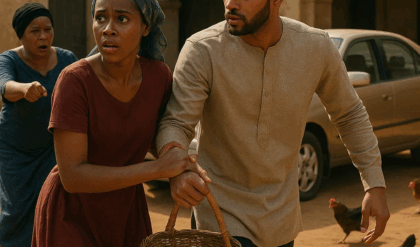
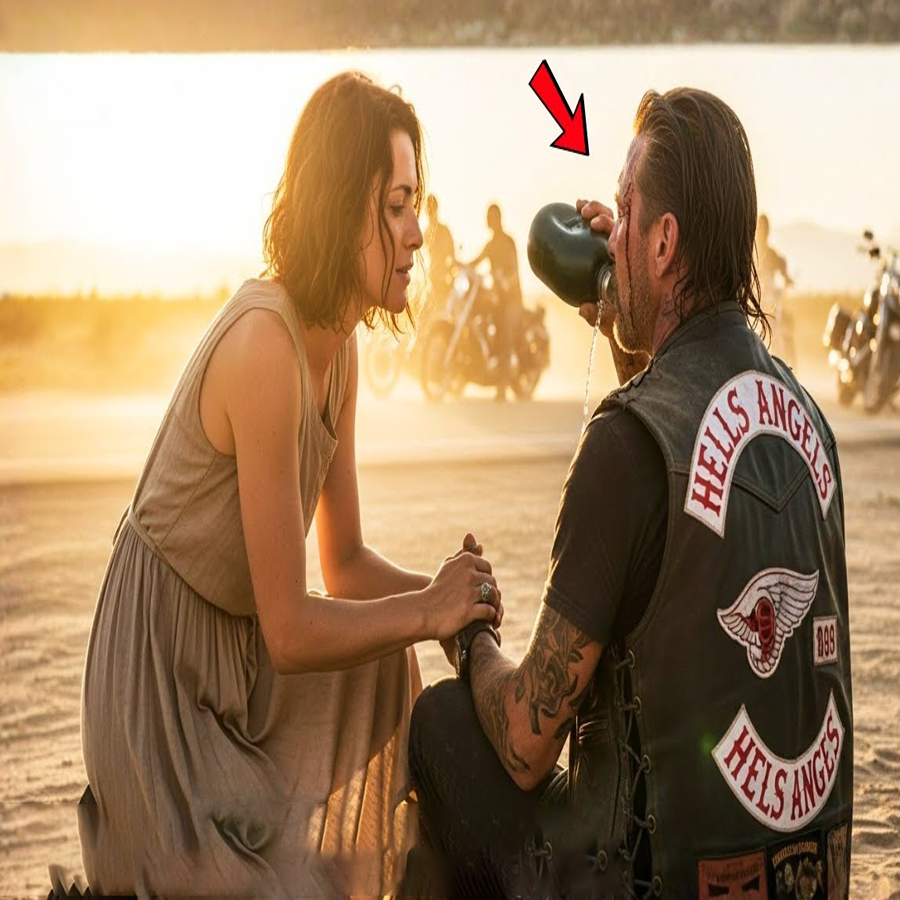
A woman knelt by a wounded biker in the dust, tilting her canteen to his split lips. Breathe, she whispered, his vest read Hell’s Angels. By sunrise, word rode the wind on CB channels. By noon, a 100 bikes thundered toward her lonely shack. Rattlesnake Flats, Arizona. August 17th, 1978. 406 p.m.
Heat shimmering off the two-lane. June Marlo walked the fence line with a dented canteen and a mind full of chores. Wind pushed tumble weed against barbed wire. The desert buzzing like an old radio left on. Half a mile out, she saw a dark shape near the cattle guard. Boots spled, chrome glinting like a busted mirror. A man lay face down in khichi dust denim shredded a blood bloom at his ribs his vest’s back patch skull with wings stole her breath Jun’s daddy used to spit at that patch call it trouble in leather trouble or not the son didn’t spare sinners she
rolled him gently early 30s road grime a jagged gouge along his side where metal must have kissed bone bike down the wash front will twisted Hey, she said, voice steady for his sake. You hear me? His lids fluttered. Water? She tipped the canteen, dribbled life across cracked lips. He coughed, caught it, swallowed.
Name? She asked, paused like a stalled engine. Rook? He rasped. Katon Hail Charter Mojave. June looked toward the empty highway. No help coming. She made the decision she’d have to live with. June tore her hem into bandages and packed the wound with clean dust, then cloth, her mother’s trick from years back when the doctor only came monthly.
Rook bit the inside of his cheek, cursing in a whisper. Don’t be brave, she said. Just stay. He managed a grin that looked like pain in a different shirt. June hauled him toward her pickup. Boots digging divots, shoulders on fire. She got him onto the bench seat. Bike bell clutched in his fist like a talisman. You got a radio? He asked, eyes glassy. CB for feed runs.
He nodded once. Channel 19. Tell Ember. Tell her I’m live. June hesitated. The old war in her chest lighting. What her daddy taught versus what she believed when nobody watched. She cranked the ignition. The Ford coughed and caught. Back at the shack, she slid him onto her kitchen table, the same place she rolled pie crusts and stitched torn sleeves.
“If you’re lying to me,” she said. “You’ll die clean anyway.” Rook’s gaze steadied. I won’t waste what you gave. June thumbmed the mic. Breaker 1 19. This is dust hen out by mile marker 64. I got a downed rider. Call sign rook says Mojave Charter. He’s breathing. Needs a medic. Over static then a woman’s voice low in flint shore.
Copy dust hen. This is ember. Sit tight. Do not move him again. We’re inbound. Another carrier bled in a nasal draw. That you June Marlo. This is Deputy Briggs. Heard you picked up trash off county property. Best let it bake. The old fear tightened her throat. Briggs had a knack for making kindness feel like crime. Ember cut across him.
Counties got no say in first aid. Dust hen patch and hold. June set the mic down, hands steady now that a decision lived in them. She boiled water, poured whiskey, stitched the wound with thread meant for feed sacks. Rook held her gaze, and counted breaths like a cadence. “Why’ you stop?” he asked between stitches. June didn’t answer.
She didn’t need to. Outside, heat threw long spears across the yard. Somewhere far, a single bike wound up to a scream. The first bike, a shovel head with open pipes, came arrowing out of glare, then two, then six. Not storming, arriving. Ember dismounted first. Tall, sunbred, braided down her back.
A medic bag slung crosswise. Her eyes assessed the wound, then flicked to June’s stitches. “Good work,” she said, meaning it. Behind her, men and women in road scarred cuts fanned out, scanning horizon, posting at fence lines. Rook tried to sit. Amber’s palm pinned him gently. “You die and I’ll kill you.
” He smirked, coughed, obeyed. The kitchen filled with the soft violence of competence. Gauze iodine murmured counts outside. A CB rig crackled on a tailgate. Mojave to all stations lock it down. We got coyotes and badges sniffing plus a wrecker nosing the wash. June stood in her doorway, rag in her fist, watching strangers treat her home like a bivwack without taking it.
Ember stepped beside her. Tomorrow, she said as if discussing whether more will come. Jun’s mouth went dry. How many? Ember’s glance moved to the horizon. Enough. The word rolled like thunder that hadn’t yet found its sky. It started as a tremble underfoot. Then a far metallic swarm. June stepped onto the porch.
The highway unspooled a black ribbon and over the rise came a wall of engines. 80, 90, 100 bikes. Hell’s angels from desert towns and copper mines, mountain passes and dry riverbeds, patched in prospect, a moving verdict. They surrounded her acorage without touching a stalk of her scrub. No whoops, no show, just steel and breathing.
Sheriff Vos’s cruisers parked at the cattle guard. Lights off, bravado dim in daylight. Deputy Briggs got out, thumb hooked in his belt like a dare. Ember walked to the fence alone, palms open. We’re leaving when he can ride, she said, tone even as a level. Until then, this land is a hospital. Voss stared at the ring of bikes and thought about outcomes.
June watched the math flicker behind his eyes. Rook’s voice, rough but awake, came from the kitchen window. June, she turned. You’re safe. Out by the fence, a hundred riders didn’t blink. Mercy had taken aside and brought its own weather. Dust rose like prayer smoke over the field. The angels idled, engines thumping a rhythm older than law.
June stood barefoot on the porch, the hem of her dress snapping in the dry wind. Sheriff Voss spat into the dirt, trying to look braver than he felt. “Lady,” he called out. You know who you’re harboring? June didn’t flinch. A man bleeding out, she said. Ember smiled faintly behind her aviators. Good answer. The biker’s shifted, chrome flashing.
Vas’s hand twitched toward his holster, but Briggs grabbed his sleeve. Not here, he hissed. Not now. The sheriff swallowed his pride and backed toward his car. “You folks clear this place by sundown. County lines ain’t yours to draw. Ember nodded once. Copy that. When the cruisers finally rolled away, silence settled heavy. June turned to Ember.
They’ll be back, she said. Ember’s gaze followed the dust trail. “Yeah,” she said softly. “But they won’t come alone next time. Neither will we.” The bikers moved like a small army, but quieter than June expected. Some refueled from hidden jerry cans. Others checked rifles wrapped in oil cloth. Ember crouched by a map spread across June’s porch table, marking lines with a grease pencil.
Briggs will bring feds or militia, she muttered. We don’t fight them here. June poured cantens from her well, feeling every drop count. Then where? Ember looked up, brown eyes calm but burning. Highway 9 bridge. They’ll come looking for blood. We’ll give them dust. June nodded slowly.
You talk like you’ve done this before. Ember smiled without humor. I patch wounds for men who think pain is a home address. You learn strategy quick. Inside, Rook stirred, muttering her name. June wiped her hands and went to him. His face was pale but alive. “You brought the army,” he rasped. Didn’t mean to, she said. Doesn’t matter, he breathed.
They ride for what matters. Dinner was jerky, beans, and silence. June’s shack once lonely as bone now hummed with life. Boots on wood, low voices, the scrape of metal on tin plates. Rook sat propped on a pillow, ember stitches neat and tight across his ribs. He winced but grinned. Your kitchen tables got better bedside manner than the VA. June smirked.
It doesn’t argue back. Across the room, an old transistor radio crackled to life. Armed bikers cited off Highway 19, possibly connected to last week’s shootout near Mojave. June stiffened. Ember shut it off with a click. They’ll twist it how they want, she said. We’ll be ghosts by morning. And me? June asked.
Ember looked at her like someone measuring steel. You already crossed the line, sweetheart. The trick now is learning how to stand on it. Outside, the desert cooled. Coyotes howled like bad memories. Inside, June lit a lantern, and for the first time, its light didn’t feel wasted. Engines whispered alive one by one. Rook’s breath caught at each sound, a rhythm familiar as prayer.
You’ll ride, Ember asked him. He shook his head weakly. Not yet. Then she stays, Ember said, nodding toward June. We’ll draw him away. June bristled. You think I can’t fight? Ember’s smile was weary but kind. I think you already did. She squeezed June’s shoulder, leather glove rough but warm. You’ll know when it’s your turn again.
The convoy rolled out slow, tail lights fading into dawn. June stood watching until the dust settled. Then she went inside, bolted the door, and sat by Rook. “You should have left me,” he whispered. “And spend the rest of my life wondering if I killed a man by doing nothing,” she said. He tried to answer, but sleep claimed him first. June looked toward the horizon, where the sound of bikes was now only memory.
She didn’t know yet that the next sound she’d hear would be engines again, but not theirs. The first truck appeared out of the mirage, a county decal shining false gold. Two more followed, then a black SUV with radio antennas bristling like thorns. Men spilled out Voss Briggs and a handful wearing federal windbreakers.
June stood on her porch, rifle at her hip. “You come for breakfast?” she asked. Vasa’s smirk was oil slick thin. We come for property. One outlaw, one accomplice. Briggs sneered. She ain’t the type to harbor, sheriff. She’s the type to fall for a patch. Jun’s eyes hardened. You best remember that I was here before your badge, and I’ll be here after it rusts.
The agents fanned out. One lifted the tarp over the Harley in her yard. This his was, June said. Now it’s mine. The agent looked up, something like respect or fear passing through his face. Then came the distant rumble, low and rising. Voss turned toward the horizon, color draining from his cheeks.
The angels were coming back. Voss’s men formed a crooked line along the fence, rifles half-raised, but trembling. The sound hit first, not wind, not weather, but a tide of machines. The kind of sound you feel in your ribs before you hear it in your ears. June shaded her eyes, heart steady as pulse.
Then they came, a wall of chrome and thunder cresting the ridge. 100 strong, red rock dust curling around them like fire. Ember road point, goggles down, braids snapping like a whip. Behind her, a black flag with the skull and wings insignia cracked in the wind. The Hell’s Angels circled the property in perfect silence. Their engines idling low, a growl that made every lawman swallow hard.
Ember dismounted, boots crunching gravel. “Sheriff,” she called, voice calm his death. “You had your warning,” Vos cleared his throat, sweat glinting on his neck. “You threatening law enforcement?” Ember’s mouth twitched. “No, sir. I’m reminding you the laws supposed to protect the living, not bury them. The desert went still.
Not even a crow dared to speak. Rook staggered out of the shack, pale but standing, vest unzipped, a crude bandage darkening with blood. Jun moved to help him, but he shook his head. I’m done hiding. His voice cut the distance like a switchblade. You got no warrant, Vos. No crime, but mercy. Voss stepped forward, hand trembling near his belt.
You think your patch makes you untouchable? Rook grinned faintly. No, Sheriff, she does. He nodded toward June. The sheriff’s mouth opened to spit back a threat, and that’s when Ember’s brothers revved their throttles once, a rolling wave that shook the windows. Briggs flinched, rifle jerking up. The sound snapped through the heat like a whip.
Ember raised her hand, palm open. “No guns,” she said. “Not unless they fire first.” Jun’s finger brushed the trigger guard of her rifle. But her eyes never left Voss. He blinked first. Always the coward, always the noise came from Briggs, twitchy, nervous Briggs. The round tore into the dirt 3 ft from Ember’s boot, throwing up dust like smoke. She didn’t flinch. Rook did.
Stand down. Vos shouted, but it was too late. Engines roared like thunder, breaking open the sky. The angels surged forward. Not chaos, but precision. Two men flanked left, cutting the sheriff’s cars off. Three others slid their bikes between the agents and the porch. A living barricade.
Ember strode straight through the dust. Rifle at low carry, voice sharp as command steel. Everyone drop it now. Briggs hesitated. Eyes wild. Ember fired once. Warning shot through his hat brim. He froze. June stepped down from the porch. Calm and certain. You heard her. She said, “Drop m.” One by one, rifles hit the dirt. The roar of engines fell away to a hum.
Vasa’s face had gone ghost white. “You’ll hang for this,” he muttered. Ember smiled thin. Maybe, but not today. They tied the deputies with their own cuffs and left them under the shade of the old mosquite. Ember’s crew gathered Rook’s busted Harley from the wash and wheeled it upright like a flag raised after battle.
June stood at the fence, dust streaking her face. Rook limped beside her. “You didn’t have to,” she said quietly. “Yeah,” he murmured. “I did. You gave water to a dead man. His hand brushed hers rough trembling. You don’t let that kind of thing go unanswered. Ember walked up, wiping her brow with the back of her glove. They’ll send more, she said.
You can come with us. Mojave Charter will take you in. You’ve earned your colors. June looked at the horizon. The empty endless kind she used to call home. I wasn’t born for colors, she said. Ember nodded. Maybe not, but sometimes the road gives you one anyway. They buried the heat of the day under a dark blue sky.
A ring of bikes surrounded the shack, headlamps glowing like campfire halos. Ember sat sharpening a blade, the metal singing softly. Rook slept inside, breath slow and steady. June sat on the steps, a tin cup of whiskey in her hand. “You ride tomorrow?” Ember asked. “No,” June said. “But I’ll leave the porch light on.
” Ember smiled. “That’s all a road needs sometimes.” From the ridge, a lone biker lifted a flare and fired it high. The red light spread over the flats like dawn in reverse. The angels revved their engines once, a salute, not to war, not to victory, but to the woman who had offered water when the world offered nothing.
June watched them go, the desert swallowing the sound, until all that was left was wind and stars. Somewhere inside, she whispered to herself, “Mercy rides fast.” Morning crept soft over the desert, leaving behind tire tracks and silence. Jun woke to the faint clink of a spoon in a mug. Rook sat at her table, pale but upright, steam curling from his coffee.
He looked smaller without the patch, like a man halfway between sinner and survivor. “They gone?” she asked. “Most of them,” he said. Ember stayed long enough to make sure you wouldn’t hang for this. June leaned against the doorframe, watching the light touch the hills. The county would be buzzing. Stories of the standoff already morphing into legend.
Outlaws surrounding a farmhouse. A woman with a rifle standing between them and the law. You think they’ll come back? She asked. Rook met her gaze. Not the cops. Them. His smile was faint. Reverent. When you help an angel breathe again, you don’t stop hearing wings. June almost smiled. That’s supposed to comfort me? Rook shrugged.
Depends what kind of woman you are. The desert wind carried news faster than radios. By noon, three cars from town slowed near the property, but didn’t stop. Folks stared through dusty windshields, whispering about the woman who stood off the law. June ignored them. She mended a fence post, sweat slick on her back, the hammer steady in her hands.
Rook watched from the porch, cigarette trembling between his fingers. You could leave, he said. Ride with us when I can sit a bike again. June drove the nail home, the sound sharp in the air. You think the road fixes everything? She asked. Rook exhald smoke. No, but it gives things space to breathe. She set down the hammer.
I’ve had enough running for one lifetime. Rook nodded slowly. Then maybe you stay, start fresh, call it something new. Like what? She asked. He looked past her toward the horizon. Home. The word hung there. Fragile as a prayer, but stubborn enough to stay. When the heat broke, June found a note under the door.
No envelope, no signature, just her name in a rough scrawl. She unfolded it carefully. Dust hen. You stood tall when most would have hid. The club don’t forget that if they come for you again. Flip the CB to channel 19 and say, “Haven, we’ll hear it.” E. June folded the note, pressing her thumb over the smudged ink. Haven.
The words settled somewhere deep in her chest. She tucked the paper into a cracked Bible her mother once kept on the windowsill. Not out of faith, but habit. That night, she sat on the porch with a kerosene lamp, staring out at the empty road. Rook slept inside, his breathing easy now. Coyotes sang out past the ridge. June whispered into the warm dark, “Guess I’ve got friends on the wind now.
” The desert for once smelled alive. Rook’s bike stood rebuilt in the yard, chrome shining like wet stone. He limped out, handgrazing the tank. runs cleaner than I remember,” he said. June wiped grease from her palms. “That’s cuz she’s mine now,” he laughed soft and real. “You earned it,” she looked up.
The horizon washed gold. “You heading back?” “Yeah, Ember says, “We’ve got to move on. Too much light on us here. And you’ll just ride away?” Rook nodded, then hesitated. “You could come. Roads open both ways. June looked past him toward the tiny grave where her father’s name plate had rusted half unreadable.
My roots don’t run. Rook, they hold. He understood. He always had. He pulled on his gloves, swung his leg over the Harley, and for a moment the world went still. Just the hum of a man who’d been saved once and the woman who’d done it. Rook kicked the bike alive, the rumble rolling through the yard like distant thunder.
June stood by the fence, hand raised, eyes steady. “You’ll see us again,” he said over the roar. “Not if I see you first,” she smiled. The bike tore down the road, dust curling in its wake until he vanished into the horizon. When silence fell again, it wasn’t empty. It was earned. June walked back to the porch. the boards creaking under her boots.
She sat in the rocker, poured herself a glass of whiskey, and watched the stars come alive one by one. Somewhere out there, a 100 bikes rode under the same sky. Somewhere mercy still mattered. June whispered into the dark. You’re welcome, Rook. If the story made you feel the rumble of loyalty, the weight of kindness, or the fire that burns in second chances, then ride with us.
Subscribe, like, and ring the bell. Because out here, every road has a story, and some names deserve to live forever in the dust.