I Said Goodbye to My Dying Husband and Walked Out of the Hospital—Then I Heard the Nurses Talking…
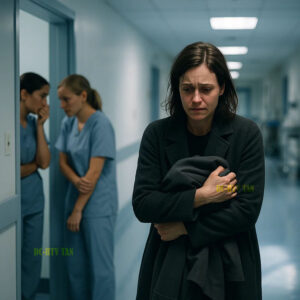
I sat on a wooden bench outside Vanderbilt University Hospital, clutching my hands together until my knuckles turned white. The spring air carried the sweet scent of blooming dogwoods, and sunlight danced on the glass facade of the hospital. Yet none of it reached me. My husband, Daniel Carter, was lying in the intensive care unit behind those walls, fighting for his life against an enemy we never saw coming.
People passed by, their conversation soft and ordinary, and for a second I wished I could be one of them, just another woman enjoying a warm afternoon, laughing about where to grab dinner or what to plant in her garden. But I wasn’t that woman anymore. My world had narrowed to a hospital room and the relentless beeping of medical machines. Daniel used to be unstoppable.
He was the kind of man who would work a 12-hour day building custom furniture, then come home and still have the energy to cook dinner and ask me about my day. He had this way of smiling that made you believe everything would be okay, even when life felt heavy. He was my safe place, my steady ground, and now watching him fade, I felt like I was standing on quicksand.
6 months ago, we thought we had a lifetime. We talked about vacations we couldn’t afford yet. A bigger house for the kids we still dreamed of having. Maybe even a dog. Then Daniel came home one night pale and exhausted, brushing off his fatigue as just a long day. But the tiredness lingered, deepened, and turned into unexplained bruises and nights when he struggled to catch his breath.
The doctor said words that didn’t seem real. Autoimmunoplastic anemia. His own body was destroying his bone marrow, shutting down the very factory that made his blood. Without a stem cell transplant, they said there was little hope. I tried to be strong in front of him, holding his hand and whispering, “We’ll get through this.
” But every night, I cried alone in the bathroom, my sobs muffled by a towel. Because I knew something Daniel didn’t. He didn’t have family. He had grown up in foster care, never knowing his parents, never even knowing if he had brothers or sisters. And without close relatives, the odds of finding a donor match were almost impossible.
We had joined the National Registry, but the doctors were honest. The wait could take months, maybe years, and Daniel didn’t have that kind of time. Earlier today, when his doctor pulled me aside, his words gutted me. Emily, we are running out of options. If we don’t find a compatible donor soon, he didn’t finish the sentence.
He didn’t have to. I knew what he meant. I sat there, tears streaming down my cheeks, feeling utterly useless. I was a nurse. I spent my life helping others heal. Yet, I couldn’t heal the man I loved most. I thought about the life we had built together. our little wooden house on the edge of Nashville. The rocking chair he made for me on our first anniversary.
The framed note he once wrote that still hangs by the kitchen door. You are my always. The thought of losing him was unbearable and still. Deep down a voice whispered that I might have to prepare for it. I hated myself for even thinking it, but grief had already started to coil its icy fingers around my heart.
Then, as if the world wasn’t cruel enough, I overheard something. A conversation that would change everything. I met Daniel on a night when life felt light and ordinary. Long before hospitals and medical charts consumed our days, I had just finished my final exam at nursing school, exhausted, but free, and my friends dragged me to a little cafe in downtown Nashville.
It wasn’t fancy, just an old brick building with worn wooden floors and the smell of roasted coffee that clung to everything. I remember him walking in like it was yesterday. He was carrying a paper bag of hardware from the local supply store, his jeans dusty from work, and there was this calmness about him, the kind of quiet confidence that makes you look twice.
He smiled shily when our eyes met and asked if the seat across from me was taken. We talked for two hours that night about everything and nothing. How he loved building furniture, how I wanted to work in pediatrics, how we both hated olives but loved peach cobbler. When he laughed, really laughed, his eyes crinkled in the corners and something in me just knew.
From that night on, Daniel became a constant in my life. He showed up with small surprises. a jar of honey from a roadside market, a wild flower bouquet wrapped in butcher paper, a new book because he remembered I’d once said I wanted to read it. He had a way of making the mundane feel like magic. Two years later, we were standing under an old oak tree, saying our vows in front of family and friends.
I wore my mother’s pearl earrings, and Daniel cried openly when he saw me walking down the aisle. He wasn’t the type of man who tried to hide emotion. He believed in showing love fully without hesitation. We moved into a small wooden house on the edge of town. A fixer upper Daniel insisted he could handle himself.
And he did. He spent weekends sanding floors, building shelves, and even crafted a rocking chair for me as an anniversary gift. That chair still sits on our porch, a silent witness to countless evenings of us rocking side by side, watching fireflies dance in the Tennessee twilight. Life felt full, even if it wasn’t perfect.
The only thing missing was children. We started trying soon after the wedding, expecting it to happen easily, like it seemed to for everyone else around us. But month after month, nothing changed. Doctors said my body wasn’t cooperating, that I might never conceive naturally. We tried treatments, hormone shots, endless appointments, and eventually IVF.
The first attempt failed. So did the second. With each negative test, I felt a little more broken, as if my body had betrayed both me and him. But Daniel, he never once blamed me. He would hold me on those nights when I cried until my head achd, whispering, “Emily, this doesn’t change how much I love you.
” He even suggested adoption, talking excitedly about how many children needed homes, how we could still have a family. I wanted to be happy with that idea. I really did. But part of me still longed to see a child with his blue eyes and that crooked half smile he wore when he was trying not to laugh. One day after another failed cycle, I collapsed in his arms, apologizing through tears, saying, “You deserve a wife who can give you a family.
” He gently tilted my chin so I would meet his eyes and said, “Emily, I didn’t marry you for children. I married you for you. You are my family.” That was Daniel, steadfast, kind, and selfless. He could have been angry, resentful, even distant. Instead, he chose love every single time. Looking back now, I realize how those struggles prepared us for what was coming.
The nights we held each other through disappointment. The dreams we reshaped together, they became the blueprint for surviving the storm that was about to hit. Because when Daniel fell ill, the world as we knew it collapsed. And yet, even lying there weak and pale, he still tried to be the strong one. He joked about hospital food, teased me about worrying too much, and told me we’d get through this, just like we’d gotten through everything else.
But deep down, I knew this was different. This was life and death. And I wasn’t ready to imagine a life without him. It started so quietly that we didn’t even notice at first. Daniel would come home from the shop earlier than usual, brushing off his fatigue with a smile. Just tired. M. Long day, that’s all.
But the tiredness didn’t fade. It grew heavier, like something invisible was pulling him down every day. Then came the bruises. Small at first, like he had bumped into a workbench, but soon they appeared without reason, purple blotches blooming across his arms and legs. One night, I woke up to the sound of him gasping for breath, clutching his chest as if he couldn’t get enough air.
The nurse in me knew something was wrong. I begged him to see a doctor. And when he finally agreed, I thought it would be something simple. A vitamin deficiency, maybe stress. Instead, we were led to a hematology specialist who ordered every test imaginable. I’ll never forget the moment the results came back. The doctor sat us down, his face too serious, his words deliberate.
Daniel, you have a plastic anemia. It’s rare, and in your case, it’s severe. Your bone marrow is shutting down. I felt like the air had been knocked out of me. Daniel just nodded, calm as always, and asked, “What do we do?” The answer was both simple and impossible. You need a bone marrow transplant.

Without it, your body can’t produce blood cells, but the process requires a donor match, ideally a sibling or close relative. I remember looking at Daniel silently begging him to say there was someone, but I already knew there wasn’t. Daniel had grown up in foster care, bounced from home to home, never knowing his parents or any siblings.
He had no family tree to turn to, no one to call. We signed up for the national donor registry immediately, but the doctors were honest. It could take months, maybe longer, to find a compatible stranger, and Daniel didn’t have that kind of time. The disease moved fast. He became pale, his strong hands trembling when he tried to pick up a cup.
The man who once built furniture until midnight now struggled to walk across the living room. Even then, he tried to protect me. He joked about the hospital gowns, about how he’d always wanted to try that bald look once his hair started thinning for medication. At night, when he thought I was asleep, I could hear him whispering prayers under his breath, asking for strength.
Not for himself, but for me. I’d hold his hand in the hospital bed and force a smile, saying things like, “We’re going to beat this.” But inside, I was terrified. Terrified of losing him. Terrified of waking up to an empty house. Terrified of facing a life I hadn’t planned for. One afternoon, after another round of transfusions, the doctor pulled me aside.
His voice was gentle, but carried the weight of finality. Emily, we are running out of options. If a match doesn’t come through soon, I’m afraid he doesn’t have much time. I nodded, unable to speak, feeling the tears burn behind my eyes. I had seen death before. Working as a nurse, you face it more often than most people. But nothing prepared me for the thought of losing Daniel.
I walked outside into the hospital courtyard, desperate for air, desperate for anything that could steady me. That’s when I heard it. Two hospital employees were on break nearby, talking casually, unaware I could hear them. You know that guy in ICU, Carter? He looks just like this guy who lives out in Pine Hollow.
I swear it’s like looking at the same person. My heart stopped. Pine Hollow, a small mountain town just a couple of hours away. Could it be nothing more than coincidence? Or could it mean Daniel had family out there, someone who might be a match? For the first time in weeks, I felt something I hadn’t dared to feel. Hope fragile, trembling hope, but hope nonetheless.
I stood frozen in the courtyard, their words echoing in my ears. He looks just like this guy who lives out in Pine Hollow. Pine Hollow was a small mountain town about a 2-hour drive east of Nashville. I had only been there once during nursing school for a community outreach program.
It was the kind of place where life slowed down, where people still waved at strangers passing by. Could it be a coincidence? People resembled each other all the time, but something inside me whispered otherwise. Daniel had grown up in foster care, abandoned at birth, with no information about his family. He had spent years wondering if there was someone out there with his same eyes, his same crooked smile, someone who might actually share his blood.
I remember the time he almost tried to find his biological parents. We were sitting on our porch one summer night when he admitted, “Sometimes I think about looking for them, but what if they didn’t want me then? Why would they want me now?” His voice had carried a quiet ache when I didn’t know how to soothe.
So he buried the thought, focused on building a life with me, choosing to believe that family was what you built, not what you were born into. But now family wasn’t just an abstract idea. It could mean the difference between life and death. That night, I barely slept. I sat at Daniel’s bedside, holding his hand while the machines hummed softly.
His skin was pale, his breathing shallow but steady. I whispered, “I’m going to fix this, Danny. I don’t care what it takes.” The next morning, I marched into work and filed for emergency leave. My boss, bless her heart, didn’t ask many questions. She knew Daniel’s situation and just hugged me before signing the form.
I packed a bag, my heart pounding with a mix of dread and determination. I didn’t even know the man’s name, only that he lived in Pine Hollow and apparently looked like my husband. I had no plan, just a single picture of Daniel on my phone and a fragile thread of hope. Before leaving, I went to Daniel’s room.
He was awake, smiling faintly when he saw me. You look like you’re about to take on the world, he teased, his voice weak but warm. I kissed his forehead and whispered, “I might be.” He tried to ask more, but I stopped him. Don’t worry about it, okay? Just rest. I’ll be back before you know it. I wanted to tell him everything about Pine Hollow, about the man who might be his family, but I couldn’t risk giving him hope, only to break it if it turned out to be nothing.
The drive out of Nashville felt surreal. The highway gave way to winding country roads, fields of early spring wild flowers, and eventually the rolling hills of Pine Hollow. As I crossed the old wooden bridge leading into town, I whispered a silent prayer. Please let this be real. Let there be someone out there who can save him.
I parked near a small general store and stepped out, clutching my phone tightly. The people here moved at a different pace. farmers loading feed sacks, an elderly woman sweeping her porch, kids riding bicycles on dusty streets. Every face I saw, I studied carefully, searching for some trace of Daniel’s sharp jawline, his eyes, anything.
I stopped at the general store and approached the clerk, a man in his 50s with kind eyes. Excuse me, I’m looking for someone. I don’t know his name, but people say he looks like this. I showed him Daniel’s photo. The man’s eyes widened immediately. You’re probably talking about Luke Henderson. Lives out by the cornfields on County Road 6. Yeah, he does look like that.
My heart skipped. Could you give me directions? He did, and I thanked him before heading back to my car. My hands trembled on the steering wheel as I drove toward what might be the answer to every desperate prayer I’d whispered in the past few months. I didn’t know if this Luke Henderson was actually related to Daniel, but I knew one thing for sure.
I was about to find out. The road to County Road 6 was little more than a stretch of cracked pavement winding through tall pines and open fields. A soft drizzle began to fall, the kind that seemed to hang in the air like a fine mist, clinging to my windshield and blurring the edges of the horizon. I slowed as I spotted the mailbox with faded white letters. Henderson.
The house behind it was old, weathered, and surrounded by a field of corn stubble and muddy tire tracks. A rusted swing creaked in the wind, and somewhere in the distance, a dog barked. For a moment, I sat in the car, gripping the steering wheel, my pulse thuing in my ears. What if I was wrong? What if I was about to knock on a stranger’s door and make a fool of myself? But then I thought of Daniel, his frail hand clutching mine, his smile, trying to hide the fear in his eyes.
And I stepped out of the car. The wooden steps groaned as I climbed them. I knocked lightly at first, then harder when no one answered. After a moment, the door creaked open. A man stood there, taller than I expected, broad-shouldered but slightly stooped, with dark blonde hair falling loosely over his forehead.
His eyes, my breath caught. They were the same piercing blue as Daniels, the same shape, the same intensity. He blinked at me. Can I help you? His voice was deep cautious with a rough edge like someone who hadn’t had to entertain strangers often. I held out my phone with trembling hands. showing him the picture of Daniel.
This this is my husband. His name is Daniel Carter. People said, “You look like him.” The man frowned, staring at the screen for what felt like forever. His expression shifted, confusion, disbelief, and something almost painful. He rubbed the back of his neck. “Well, I’ll be damned.” He looked at me again, softer now.
“Who are you?” “Emily, I’m his wife.” He stepped aside. You better come in. The inside of the house was humble wood floors, mismatched furniture, the faint smell of coffee and motor oil. He gestured to a chair. Sit. You You’re saying he’s your husband. I nodded, clutching my bag in my lap. He’s in the hospital. He’s very sick.
He needs a bone marrow transplant. They said he has no family. But then I heard about you and I just my voice broke. I had to come. The man, Luke Henderson, as I quickly learned, sat opposite me, leaning forward, elbows on his knees. He looked at the photo again, shaking his head slowly. I think I think he might be my brother.
Those words hit me so hard I almost couldn’t breathe. Your brother? Luke nodded. Our mom. She wasn’t much of one to be honest. She had a lot of kids, most with different fathers. When I was little, she had another baby, a boy. She said she wasn’t keeping him. Signed papers at the hospital and left him there.
I was too young to do anything, but I never forgot. Always wondered what happened to him. He rubbed his face with both hands, his voice cracking. I didn’t even know his name until now. My eyes blurred with tears. Daniel’s been looking for family his whole life. He thought he was completely alone. Luke’s jaw tightened and he stood abruptly.
I’ll do it. The transplant. I don’t even need to think about it. You You do that. He’s my brother. If there’s a chance I can help him live, of course I will. He walked into the kitchen and returned with his truck keys. When do we go? For a second, I just stared at him, stunned by how quickly he’d made the decision.
In my head, I had imagined convincing him, explaining the situation, maybe even begging, but there was none of that. It was like he had been waiting for this moment without even knowing it. We left Pine Hollow that evening, the rain now heavier, streaking the windshield as Luke drove behind me in his old pickup truck.
My chest felt lighter for the first time in months. There was still fear. There was always fear, but now there was also something else. hope that felt solid, like ground under my feet. When we arrived at Vanderbilt University Hospital, I led Luke through the sterile white halls to Daniel’s room.
Daniel was awake, propped up by pillows, his skin pale, but his eyes brightening when he saw me, then narrowing in confusion when they shifted to Luke. For a long moment, no one said a word. Daniel’s mouth opened slightly like he was staring at a ghost. Luke stepped forward, emotion thick in his voice. I think I’m your brother.
Daniel blinked, tears welling instantly. My brother. I stood there watching two men, strangers a day ago, brothers by blood, lock eyes as if recognizing something only they could feel. Daniel reached out a shaking hand. And Luke took it firmly. We’ll talk later, Luke said softly. But right now, I’m here to save your life.
Luke’s test results came back faster than I expected. The doctors wanted to expedite everything because Daniel’s condition was deteriorating quickly. When the hematologist stepped into the waiting room with that soft, relieved smile, my knees nearly gave out. “He’s a strong match,” she said. “One of the best we’ve seen in a while.
” I turned to Luke, tears brimming in my eyes. “Did you hear that? You’re a match. You can save him. Luke’s expression wavered between shock and determination. Then let’s do it. When do we start? That night, Daniel and Luke finally had time to sit together. I stayed just outside the doorway for the first few minutes, giving them privacy, but I could still hear their voices.
Low, emotional, hesitant at first, then warmer as minutes passed. Daniel’s voice broke as he said, “I used to dream about having a brother. I thought it was stupid, like dreaming about a house you’ll never live in. But here you are, real.” Luke chuckled quietly, though his voice was thick. “Guess life had other plans, huh?” “I’m sorry I wasn’t there, Danny.
I didn’t even know.” “You don’t have to be sorry,” Daniel said, gripping Luke’s hand with surprising strength for someone so weak. You’re here now. That’s all that matters. When I stepped back into the room, Daniel looked at me with damp eyes and whispered, “I have a brother. M I’m not alone.” I kissed his forehead and smiled, whispering back, “You never were.
” The procedure was scheduled for the next morning. I barely slept, my mind racing through every possible outcome. Luke was calm, even joking with the nurses as they prepped him for the donation. “Never thought I’d be giving my bone marrow to a guy I met yesterday,” he teased, then looked at Daniel and added softly.
But I’m glad it’s him. The hours crawled by, but eventually it was done. The transplant went smoothly, and Daniel was moved to a recovery room while the new stem cells began their life-saving work. I sat by his bed, holding his hand, feeling the warmth returned to his skin. For the first time in months, his face had a hint of color.
“Luke came in later, looking tired but content, and Daniel reached out weakly to clasp his brother’s arm.” “You just gave me a second chance,” he whispered. Luke smiled and said, “Guess we’re even now. You gave me family.” I couldn’t stop the tears this time. For months, I had carried so much fear, so much loneliness.
But now, sitting there between these two men who had found each other against all odds, I felt something I hadn’t dared to feel in so long. Peace. Outside the window, Nashville’s skyline shimmerred under the late evening lights. And I thought about how quickly life could shift from despair to hope, from loss to gain.
Sometimes in just a matter of days. For the first time in months, I allowed myself to breathe deeply and believe that Daniel might actually survive, and that we had been given a gift far greater than we had asked for. The days following the transplant felt like stepping into a new world, one where hope finally outweighed fear.
Daniel’s body responded well to the transplant. Each morning, I’d watch for the tiniest signs. A bit more color in his cheeks, a steadier tone to his voice, a stronger grip when he held my hand. Luke stayed nearby, sleeping on an old pullout chair in the waiting area when the hospital rules didn’t allow him to stay in Daniel’s room overnight.
He never complained. One evening, I brought him a cup of coffee and found him staring at Daniel through the glass, a look of quiet awe on his face. He’s really my brother,” he said softly, as if still convincing himself. Daniel began to regain his strength slowly, and one crisp autumn afternoon, he took his first steps outside since the transplant.
I walked beside him as he shuffled carefully along the hospital’s garden path, sunlight flickering through the changing leaves. “I forgot how good fresh air feels,” he whispered, squeezing my hand. A week later, Daniel was discharged and we returned to our little wooden house on the edge of Nashville. This time with Luke following in his old pickup truck, a permanent addition to our lives.
The house felt different now, fuller somehow, like it had been waiting for this reunion all along. In the weeks that followed, Luke became a regular presence. He and Daniel would sit on the porch in the evenings sharing childhood memories, at least what little Daniel had of his foster homes, and Luke filling in gaps about their mother, their early years, the siblings Daniel had never met.
One evening, Luke handed Daniel a small, worn pocketk knife with her father’s initials carved into the handle. “It’s all I have left of him,” Luke said quietly. “I want you to have it.” Daniel held it with shaking hands. tears slipping silently down his cheeks. The community of Pine Hollow sent cards, prayers, even casserles when they heard what had happened.
People I’d never met sent notes like, “Family is everything. Hold each other close.” There was something profoundly healing about strangers caring enough to reach out. It reminded me that goodness still existed everywhere, even in the hardest seasons. Months passed and Daniel grew stronger. His hair began to thicken again, his laugh returned, and he started building furniture in the garage, slower than before, but with that same spark of creativity he’d always had.
One evening, he pulled me outside to the porch where a brand new rocking chair sat, crafted with careful precision. For you, he said simply, I sat down and felt tears blur my vision as I rocked gently, the chair creaking with a familiar warmth. We also welcomed Luke into our traditions. Sunday dinners became a staple filled with laughter and quiet gratitude.
Sometimes I’d catch Daniel and Luke looking at each other with these half smiles, like they still couldn’t quite believe they’d found each other. One particularly golden autumn evening, Daniel and I walked along a treelined road near Pine Hollow, hand in hand, watching leaves swirl in the breeze. Luke was ahead of us, laughing as he carried his young niece, his best friend’s daughter, on his shoulders.
Daniel squeezed my hand gently. “You know,” he said. “I used to think being an orphan meant I’d always be alone, but I was wrong. I have you. And now I have him, too.” I looked at him, feeling the truth of those words settled deep in my chest. “Family isn’t always about blood, Dany,” I whispered.
But sometimes it is, and it’s beautiful. That night, as we sat around a small bonfire behind Luke’s house, the flames casting soft glows on everyone’s faces, I felt something I hadn’t in so long, a calm certainty that we were going to be okay. Life had broken us down, yes, but it had also put us back together in ways we never expected.
I rested my head on Daniel’s shoulder, listening to Luke telling a story about their childhood neighborhood, and thought to myself, “This is it. This is what healing feels like.” Our story had begun in despair. But it didn’t end there. It ended with family with second chances, with a brother found, and a life renewed. And as I closed my eyes, the crackle of the fire and Daniel’s warm hand in mine, I realized something powerful.
Sometimes life gives you exactly what you need. Just when you’re about to lose hope.