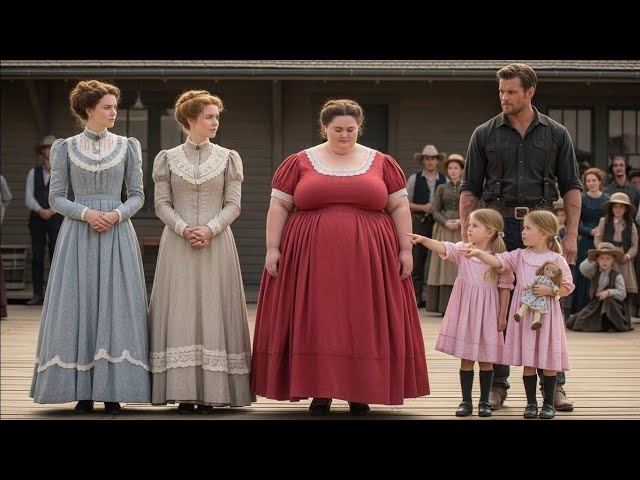
In the dusty town of Willow Creek, 1876, the sun hung low, casting shadows over cobblestone streets. Twins Ila and Lucy, with ribbons in their braids, tugged at their father’s coat. We want her daddy. They chimed, pointing to widow Clara’s bakery. Her window displayed pies golden and steaming.
But the town’s whispers weren’t about her baking. They called her too wide to wed. Clara, sturdy and kind, kneaded dough with hands strong from years of work. Her laugh filled the shop, warm as her ovens. The twins adored her, sneaking in daily for stories and sweets. Their father, James, a reserved blacksmith, hesitated. Widowed himself, he felt the town’s eyes on him.
She’s not proper, they’d say of Clara, judging her size, her independence, her unwed state. Laya, bold and freckled, whispered to Lucy, Clara’s perfect. She makes the best tarts. Lucy nodded, her curls bouncing. They’d lost their mother young, and James was stern, his heart heavy. The twins saw Clara’s smile as a beacon, a chance for warmth.
They plotted in their attic room, sketching plans by candle light to make their father see Clara, as they did kind, not too wide. The town square buzzed with gossip. Women in bonnets leaned close, muttering about Clara’s broad shoulders, her unwed years. No man wants a woman so substantial, sneered Mrs. Tate, the mayor’s wife.
But the twins, hiding behind barrels, overheard and fumed. They vowed to prove the town wrong, to show Clara’s heart was bigger than their cruel words. Her worth beyond their jeers. Dot. James hammered iron in his forge, sweat on his brow. He loved his girls, but feared their whims. Clara was kind, yes, but the town’s judgment weighed heavy. He’d heard the whispers.
Clara’s late husband left debts, and her bold laugh wasn’t ladylike. Still, her pies warmed his home, left by the twins. Each bite stirred something in him. A flicker of forgotten hope. One Sunday, the twins dragged James to Clara’s bakery. “Try her apple tart, Daddy.” Leila urged. Clara, flower dusted, smiled softly.
James met her hazel eyes, steady and warm. Made fresh, she said, her voice like a hearth. He bit into the tart, sweet, spiced. Perfect. The twins giggled, watching his face soften. For a moment, the town’s whispers faded. Drowned by Clara’s quiet strength. Dot. At the town fair, Clara’s stall drew crowds.
Her pies vanished fast, but whispers lingered. Too wide to wed. A farmer’s wife hissed. Lla overhearing stomped forward. Clara’s pies are the best. You’re just jealous. The crowd hushed. Lucy joined in. She’s kind too. James watching felt pride swell. His girls saw what the town did in Clara’s heart. Not her size mattered. That night, James lingered at Clara’s shop.
Your pies,” he said, awkward there. “Good for the girls,” Clara chuckled. “Just pies, James.” Her eyes teased, bold yet gentle. He blushed, unused to such warmth. The twins, peeking through the window, stifled giggles. “He likes her,” Lucy whispered. Laya nodded, scheming. They’d make sure Daddy saw Clara as more than a baker.
The twins hatched a plan. They’d host a supper. Clara’s cooking, their home. Invite her, Daddy. They begged. James cornered. Agreed. Clara arrived. Apron swapped for a blue dress, her curls pinned high. The table groaned with her dishes, roast bread, pie. The twins beamed as James ate, his smiles rare but real.
Clara’s laugh filled the room, easing his guarded heart. Gossip grew sharper. Mrs. Tate cornered James at church. Clara is not for you, she warned. Think of your girls. James bristled. His girls loved Clara and he he wasn’t sure. Her strength, her ease drew him. But the town scorn stung. At home, Laya overheard and cried.
Why do they hate her? Lucy hugged her. We’ll show them, Laya. Clara’s dot. Clara sensed the whispers, but held her head high. She’d faced worse debt, loss, loneliness. Her bakery was her pride, built from nothing. The twins visits were her joy, their chatter a balm. James’s quiet visits, too, stirred her. His gray eyes held pain like hers, but also kindness.
She dared not hope, but when he lingered talking of iron or weather, her heart quickened. The twins, tireless, planned a picnic. They begged Clara to bake, James to join. By the creek under Willows, they spread a quilt. Clara’s basket held tarts, bread, jam. James carved a whistle for Lucy, laughing as Laya chased dragonflies.
Clara watched, her smile soft. You’re good with them, she said. James met her gaze. They need someone like you, he murmured dot back in town. Gossip turned venomous. James is bewitched. A shopkeeper spat. Clara is too bold, too big. The twins fetching flower heard and ran to Clara, tears hot. They’re mean. Leila sobbed. Clara knelt, hugging them.
Let them talk, she said. We know what’s true. Her strength steadied them, but James, hearing later, clenched his fists. The town was wrong. Clara was enough died at the harvest dance. The twins schemed again. They begged Clara to attend. James to escort her. Clara in green silk shown despite stairs. James stiff in his best coat offered his arm.
They danced, awkward but earnest, her laugh easing his nerves. The twins clapped, delighted. Whispers buzzed, but for once James didn’t care. Clara’s warmth out shown the town’s cold judgment. Winter crept in, chilling Willow Creek. Clara’s bakery glowed, a haven. The twins spent hours there learning to bake.
James joined, claiming he needed bread. Clara teased. for the girls or you?” He smiled, rare and warm. The twins saw it a spark. They whispered plans, leaving notes for James, Mary Clara. He found them, heart racing. Could he defy the town for her? Mrs. Tate rallied the town’s matrons, demanding James think of his status. They cornered him at the forge.
“Clare is no wife,” they said. James temper flaring snapped. She’s more than you know. He stormed to Clara’s finding her needing dough. They’re wrong, he said, voice low. Clara’s eyes softened. Let them talk, James. I’m happy as I am. But her heart hoped for more. The twins, desperate, wrote a letter. Dear Clara, Daddy loves you. Marry him.
They slipped it under her door. Clara read it laughing through tears. She loved the girls, admired James, but feared his hesitation. At church, she caught his eye, bold. Your girls are trouble, she teased. He grinned the best kind. The twins, watching, high-fived. Their plan was working. Slowly but surely, spring bloomed, and the twins planned a festival stall with Clara.
They’d sell her pies, prove her worth. The town came, drawn by the scent. Even Mrs. Tate bought a slice, grudgingly impressed. James helped, carrying crates, his arm brushing Clara’s. You’re good for this town, he said. She smiled. And you? His silence spoke volumes, his eyes locked on hers, full of unspoken promise. Gossip softened as Clara’s pies one hearts.
The twins, triumphant, kept pushing. “Ask her, daddy,” they urged. James, wrestling doubt, visited Clara’s shop alone. “The girls love you,” he said, voice rough. “And I I see why.” Clara’s breath caught. “James, I’m no delicate lady.” He stepped closer. “You’re better. You’re Clara.” The air hummed with possibility, their hands nearly touching dot at the town’s May picnic.
The twins staged their final plan. They led James and Clara to a quiet grove, then ran off, giggling. Alone, James faltered. Clara, the town. They talked. She met his gaze unflinching. Do you care? He shook his head. Not anymore. He took her hand, calloused but warm. Marry me, he said. Clara’s laugh rang out joyful. About time, James. The twins, hiding nearby, cheered.
They raced back, hugging Clara. You’re ours now. Lucy cried. Laya nodded forever. James, red-faced but happy, pulled them close. Clara’s eyes shown, her heart full. The town could whisper she was loved, not for her size, but her spirit. Willow Creek would learn through pies and laughter that Clara was never too wide for love. Wedding plans sparked.
Clara baked her own cake. Three tears of spice and cream. The twins helped, flower dusted and giddy. James forged a ring, simple but strong like Clara. The town softened by her kindness began to celebrate. Mrs. Tate eating crow sent a quilt. Clara laughed generous. “Let them come,” she said. “We’ll feed them all.
” Her joy was infectious, undeniable. The church bells rang on a June morning. Clara, in ivory lace, walked with James, the twins scattering petals. The crowd, once cruel, now smiled. Clara’s strength had won them. Laya whispered, “We did it!” Lucy squeezed her hand. James at the altar looked at Clara like she was the world.
Her vows were steady, his earnest. The twins beamed, their family whole at last. The reception spilled into the square. Clara’s pies vanished, laughter echoing. James danced with her, no longer stiff. The twins twirled, ribbons flying. Even Mrs. Tay clapped, swayed by joy. Clara, radiant, whispered to James, “Worth the whispers.
” He kissed her hand. Worth everything. The town saw it. Love, not size, defined her. Clara was theirs, and they were hers. Summer settled, and the new family thrived. Clara’s bakery buzzed. Now with James’s iron work displayed horseshoes, hooks, art, the twins learned both trades.
Proud gossip faded, replaced by admiration. Clara, once too wide, was now the town’s heart. She baked for every wedding, every birth. Her hand shaping more than dough-shaping hope. Home love. One evening, by the forge’s glow, James pulled Clara close. The girls were right, he said. You’re the one. She laughed, her warmth filling the night.
Took you long enough. The twin spying giggled. Their plan, born of love, had worked. Willow Creek, once cold, now warm to Clara’s light. Her size was her strength, her heart, the town’s treasure. Her family complete. Years later, the twins grown, told their children of Clara. She was big in every way, Laya said, smiling.
Big heart, big laugh, Lucy added. And the best pies. Their story spread. A legend of love over judgment. Clara’s bakery stood a beacon. Her legacy wasn’t just pies, but proof. No one is too wide for love. Not when hearts like hers lead the way. Dot. In Willow Creek, the whispers changed. Clara’s name meant kindness, strength, home.
The twins, now women, baked her recipes, passing down her spirit. James Gray, still held her hand, grateful. The town learned judge, not by size, but by soul. Clara, once shunned, was their pride. Her love, her pies, her family proved it. In love, there’s no too wide, only wide enough.